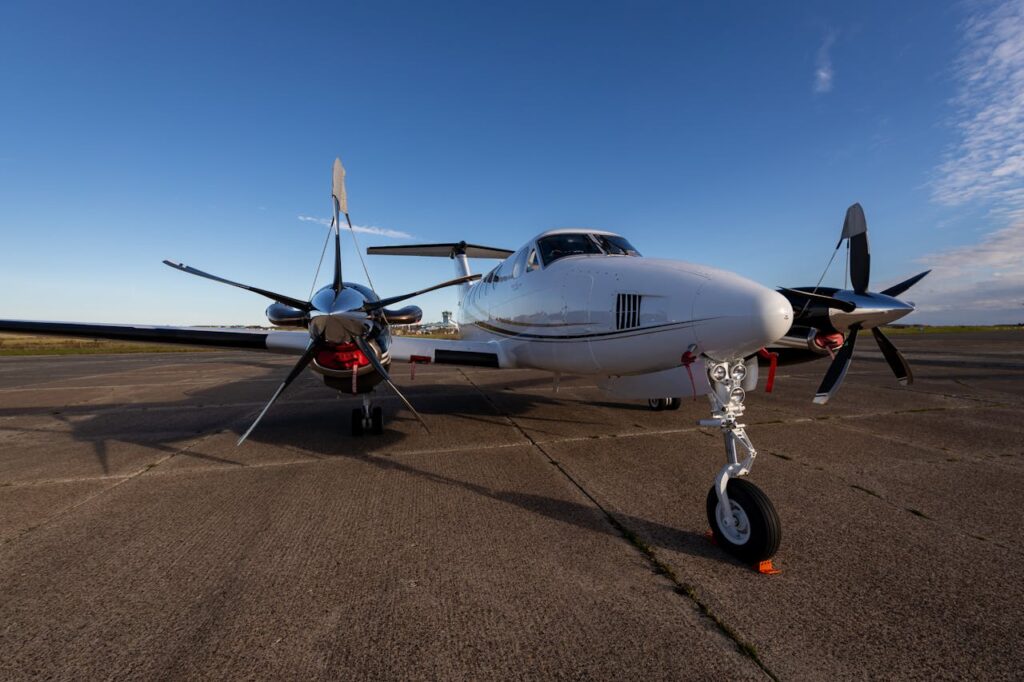
Buying a business jet or helicopter is only ever as safe as the paperwork behind it. This aircraft due diligence checklist is the same one Skycraft Aviation Solutions runs on every acquisition before a client signs — covering title, security interests, maintenance history, airworthiness and insurance — so you know exactly what to check before you commit.
1. Confirm the aircraft’s identity, registration and title
Start by reconciling the manufacturer’s serial number, registration mark and current CASA Aircraft Register entry against the sale documents. Confirm the seller named on the register is the seller you’re actually dealing with, and that there’s a clear path to transfer registration once funds change hands.
2. Search the PPSR for security interests
Aircraft are personal property under Australian law, so any mortgage, lease or finance interest is recorded on the Personal Property Securities Register (PPSR), not the CASA register. A clean PPSR search before settlement is non-negotiable — an unreleased security interest can follow the aircraft to its new owner.
3. Review the complete maintenance record set
Airframe and engine logbooks, total time and cycles, and the current maintenance release should all reconcile with each other. Treat any gap in the paper trail as a red flag rather than an oversight — missing records are one of the hardest things to fix after settlement.
4. Check outstanding Airworthiness Directives and Service Bulletins
Every applicable Airworthiness Directive (AD) needs a documented compliance record, not a verbal assurance it’s “up to date.” Outstanding ADs or overdue Service Bulletins can mean unbudgeted work — and in some cases grounding — the moment the aircraft changes hands.
5. Trace every repair, modification and damage history entry
For any prior damage or modification, ask for the engineering approval, the accomplishment paperwork and evidence it was completed to that standard. A repair that isn’t properly documented can complicate future maintenance approvals and resale value alike.
6. Commission an independent pre-purchase inspection
A pre-purchase inspection is not the same as the aircraft’s last annual or periodic inspection, and it shouldn’t be performed by whoever currently maintains the aircraft. An independent inspector working for you, not the seller, is what actually protects your position.
7. Confirm engine and component program enrolment
If the aircraft is enrolled in an engine or APU maintenance program, check what’s actually covered — serial numbers, hourly rate, exclusions, and whether enrolment transfers to a new owner at all. A program that doesn’t transfer can materially change the aircraft’s ongoing cost of ownership.
8. Confirm insurance history and any prior claims
Ask for the aircraft’s insurance history, including any prior claims and how they were resolved. It’s a fast way to surface damage history that never made it into the logbooks, and insurers will want this information anyway before they’ll quote your new policy.
9. Verify who is actually approved to maintain the aircraft
Not every workshop that touches an aircraft is automatically approved to sign it back into service. Check whether ongoing maintenance sits under a CASA-approved Part 145 organisation or a CAR 30 certificate holder, and confirm that whoever issues the next maintenance release or Airworthiness Review Certificate (ARC) actually holds the right approval for that aircraft type. A gap here can leave you holding an aircraft that’s technically not fit to fly until it’s resolved.
Due diligence done properly takes time — which is exactly why we treat acquisition and compliance as one connected process rather than two separate problems. If you’re weighing up a purchase, get in touch with Skycraft Aviation Solutions before you sign, not after.